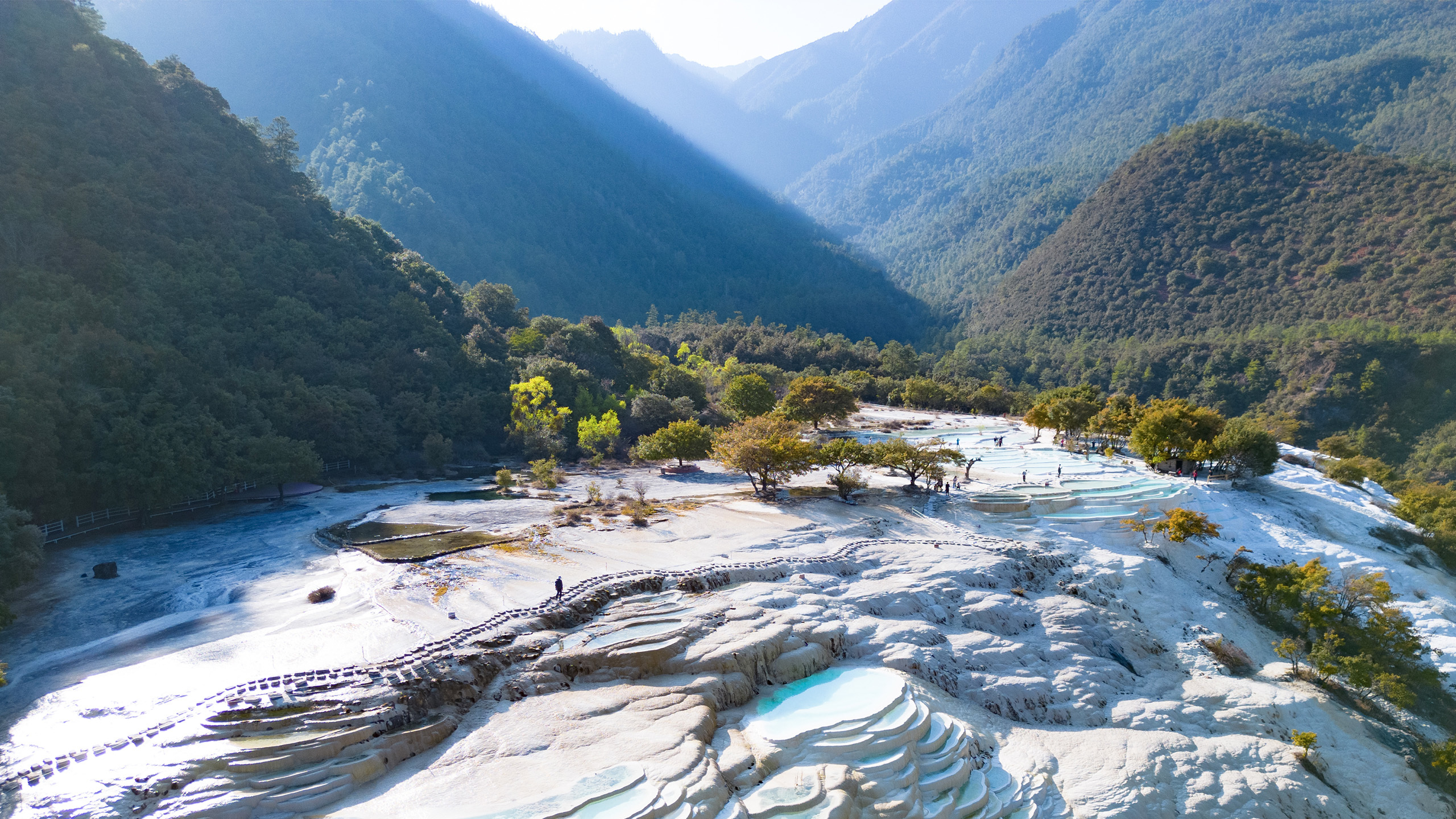
Bai Shui Tai Scenic Area
Attractions
News
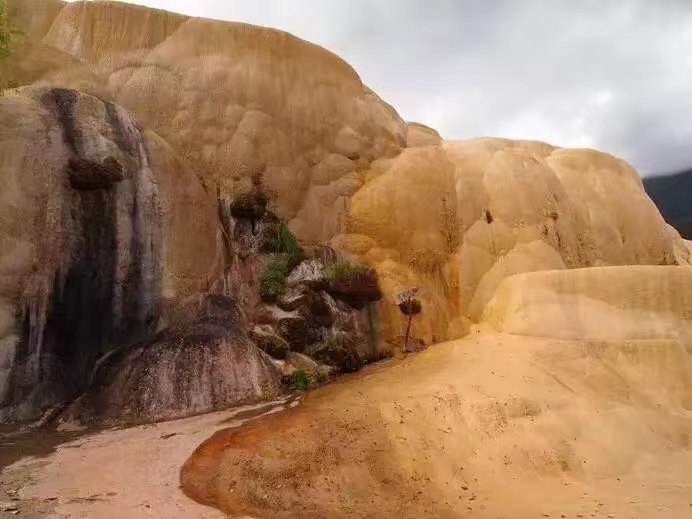
The goddess manifests her spirit
At the foot of the White Water Terrace, there is a natural statue, pure white like jade, resembling a pregnant woman. It is a place where local people worship the fertility goddess and newlyweds pray for children. Here, there are often devotees and newly married couples who come to burn incense and bow down. The local people regard it as the "goddess of fertility." It is said that men and women who are eager to have children or are infertile will have their wishes fulfilled as long as they worship here.
Bai Shui Tai Scenic Area
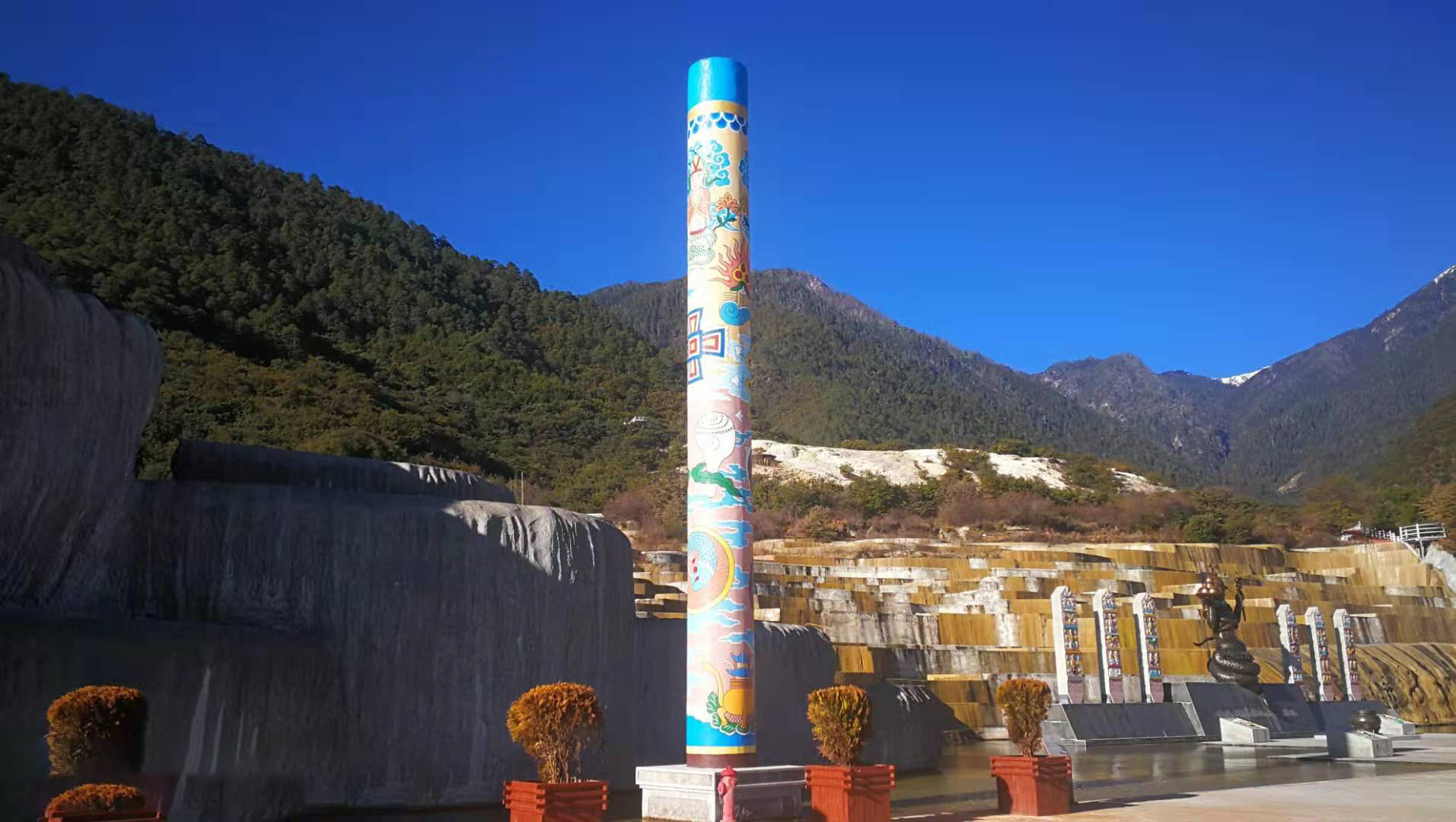
Pillar of Heaven
The Dongba ancient text "Genesis" records that the nine brothers of the sky and the seven sisters of the earth created the heavens and the earth. However, the heavens and the earth were unstable, so the celestial deity established the precious pillar to support the sky, holding up the blue sky above and stabilizing the earth below, thus forming the world initially. The pillar is carved with eight auspicious patterns: white conch, pure water bottle, precious umbrella, auspicious knot, dharma wheel, double fish, lotus flower, and victory banner. The eight treasures are common auspicious patterns in Dongba ancient texts and Dongba paintings, offered as treasures to the deities to bring them joy, thereby bestowing blessings upon people.
Bai Shui Tai Scenic Area
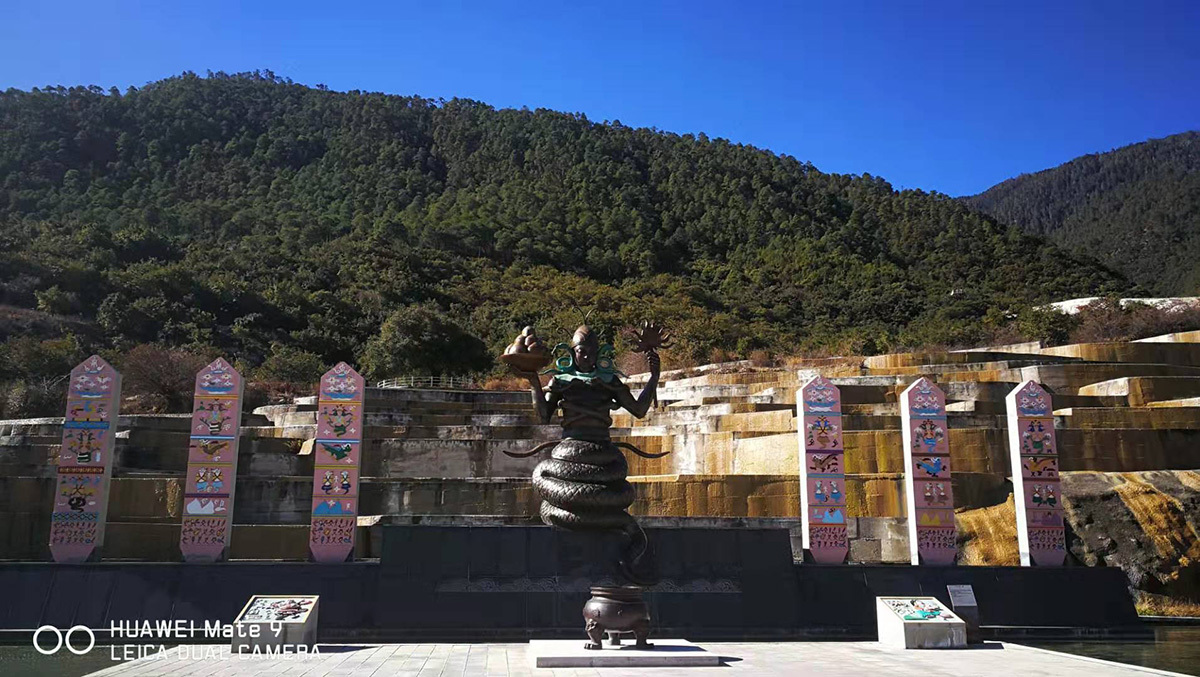
Bronze Statue of Natural Deity
"Shu" is the natural deity worshipped by the Naxi people, governing all things in nature and being omnipresent in the natural world. The leader of the "Shu" gods resides in the famous mountains and great lakes. Baishuitai is an important habitat of the "Shu" god as recorded in the Dongba scriptures and a unique place for the worship of natural deities.
Bai Shui Tai Scenic Area
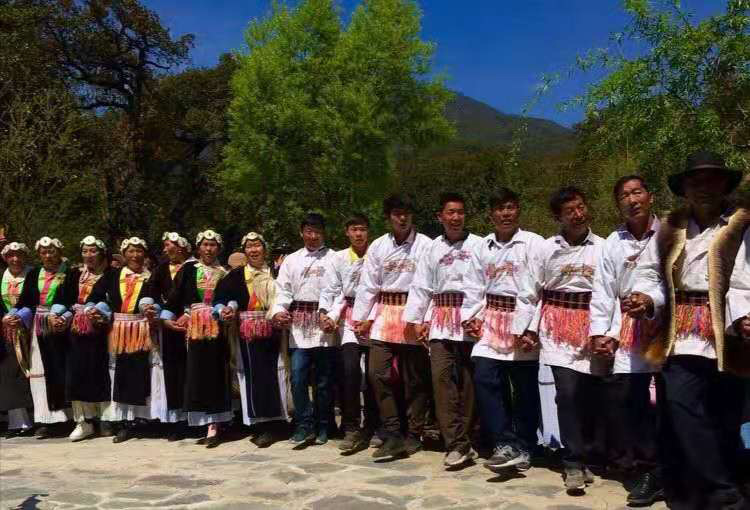
On the eighth day of the second month of the lunar calendar, the "Weishuada Lili" dance is performed at Baishuitai.
The traditional festival theme song and dance "Weishuada Lili" in the lunar calendar on the eighth day of the second month is also known as "Yalili" and "Akabala." The music of this song and dance is melodious, the singing is powerful and bright, the dance movements are rhythmically robust, and the lyrics are very rich.
Bai Shui Tai Scenic Area
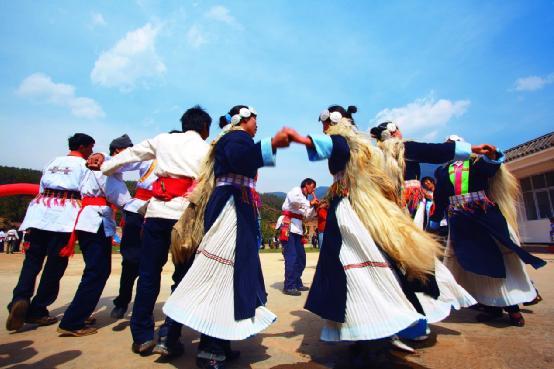
Spring Festival "February 8"
Every year on the eighth day of the second month of the lunar calendar is the national festival of the Naxi ethnic group. Families from the Naxi, Tibetan, Yi, Han, Lisu, Bai, Hui, and other ethnic groups within a hundred miles gather at Baishuitai to worship the gods, enjoy spring outings, and have picnics.
Bai Shui Tai Scenic Area
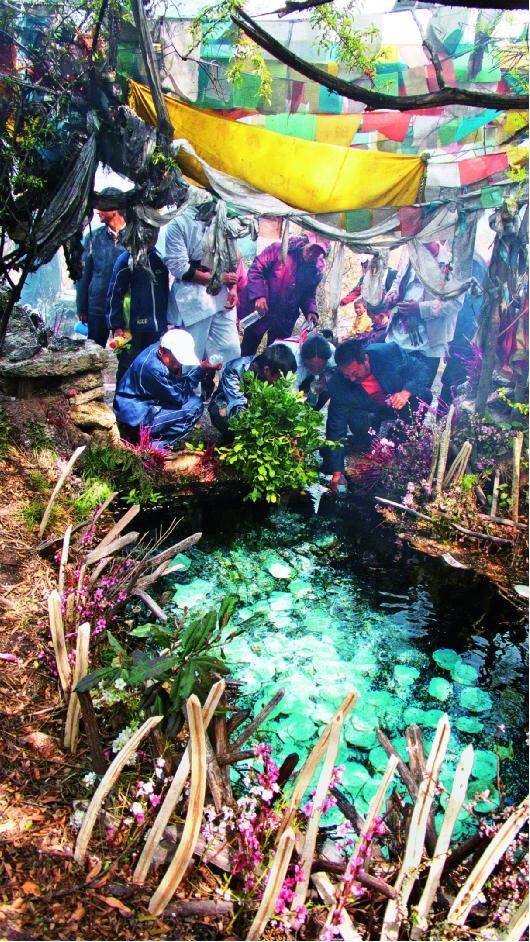
Sacred Altar of Heaven
The Bowan Village holds a ceremony to worship the heavens at this altar on the seventh day of the second lunar month each year. The main altar is dedicated to the heavenly god (the father-in-law of the human ancestor Chongren Lien), the earth god (the mother-in-law of Chongren Lien), and the heavenly uncle (the uncle of the grandmother Chen Heng Baobai); the left side is dedicated to the natural god "Shu" and the altar for burning incense to the heavens.
Bai Shui Tai Scenic Area
Diqing Shangri-La Tiger Leaping Gorge Tourism Management Co., Ltd.
Service Hotline:0887-8806982
Service E-mail:786245727@qq.com
Address: Tiger Leaping Gorge Town, Shangri-La City, Diqing Tibetan Autonomous Prefecture, Yunnan Province
Quick Navigation
Focus on us

Public Number

Online booking
Copyright: Diqing Shangri-La Tiger Leaping Gorge Tourism Management Co., Ltd.